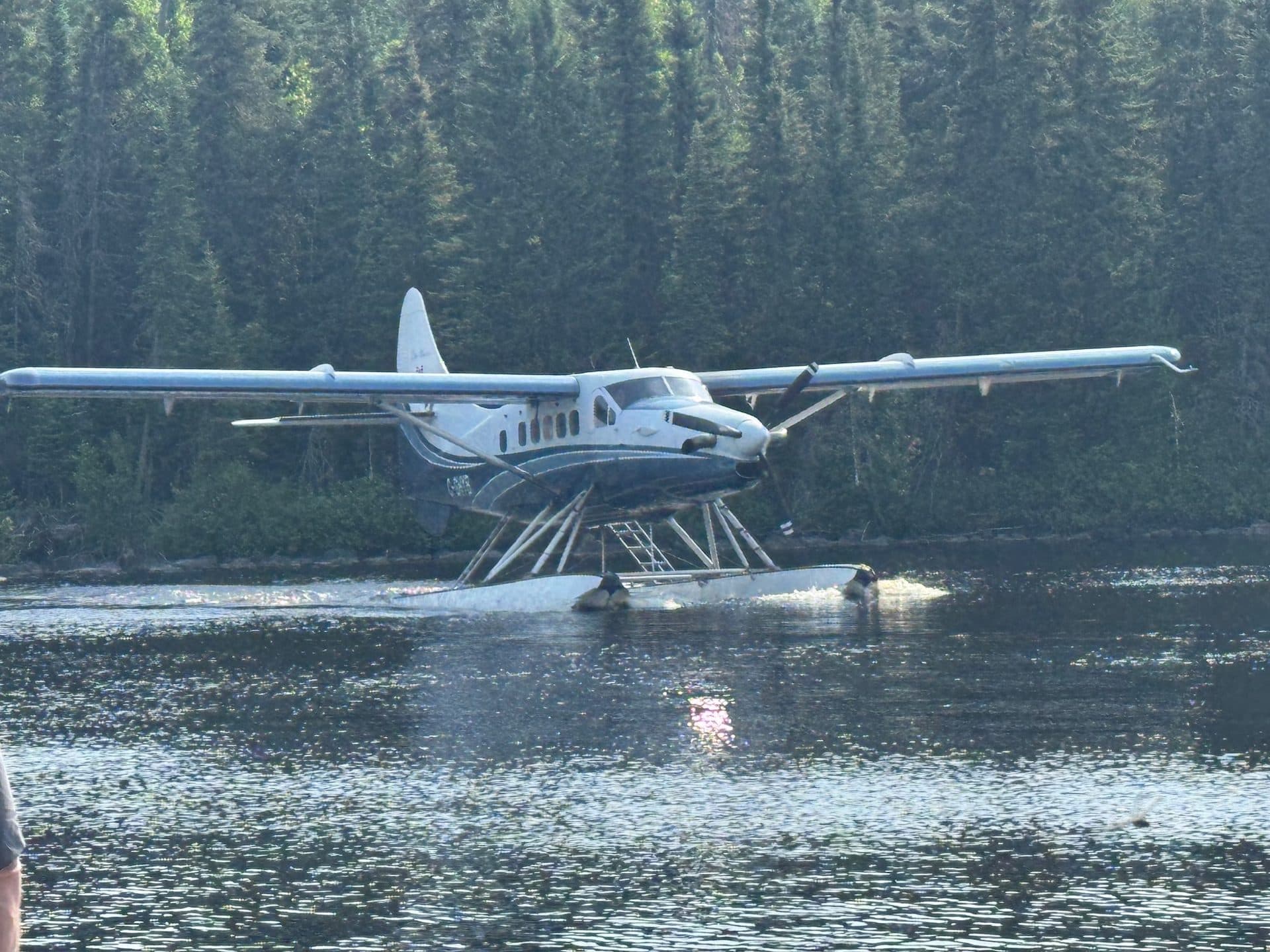
If you've ever dreamed of fishing a lake with no roads, no crowds, and more walleye than you can count — that's fly-in fishing. It's one of the last truly wild fishing experiences left in North America, and Manitoba is one of the best places on earth to do it.
We've been running fly-in fishing trips at Dogskin Lake Lodge for over 55 years, and we've helped thousands of guests — from first-timers to lifelong anglers — experience what it's like to fish water that most people will never see. This guide covers everything you need to plan your trip.
What Fly-In Fishing Actually Means
Fly-in fishing is exactly what it sounds like: you fly into a remote lake by floatplane because there are no roads. The lakes are deep in the wilderness, accessible only by air, which means the fishing pressure stays low and the fish populations stay healthy.
At Dogskin, your trip starts at the Adventure Air floatplane base in Lac du Bonnet, Manitoba. From there, it's a scenic 45-minute to one-hour flight over boreal forest, rivers, and lakes before you touch down on the water. That flight alone is worth the trip — there's nothing quite like watching the landscape unfold from a floatplane window.
Why Manitoba
Manitoba is one of the premier fly-in fishing destinations in the world, and there are good reasons for that. The province has an enormous amount of remote, pristine water. Atikaki Provincial Park alone spans nearly one million acres of protected wilderness — no roads, no development, no public access. It's one of the largest protected wilderness areas in North America.
Dogskin Lake sits deep inside this park. We hold exclusive outfitting rights on 7,000 acres of water with 74 miles of shoreline. That means no competing lodges, no public boat launches, and no one else fishing your water. When you're out on the lake, it's just you, your group, and the fish.
What Species You'll Catch
The two primary species at Dogskin Lake are walleye and northern pike.
Walleye are the bread and butter of the fishery. Guests consistently catch walleye in the 18-to-24-inch range, with trophy fish over 28 inches landed regularly. Our lakes have naturally stained water, which means walleye feed during the day — so you're fishing productive hours from morning through evening.
Northern pike are the other star. Thick, healthy pike thrive in the bays and weed beds, with trophy fish over 41 inches caught every season. If you enjoy the fight of a big predator on the end of your line, Dogskin delivers.
You'll also find perch, burbot, and whitefish in some of our waters.
When to Go
Here's something we tell every guest: there is no bad time to fish Dogskin Lake. The fishing is consistent all season long — from late May through September. It's more about where you fish and how you fish than when you arrive. Our staff and guides know the patterns, and they'll point you in the right direction no matter what week you're here.
That said, the season runs from late May through mid-September, with the lodge operating at full capacity throughout. If you have specific dates in mind, book early — popular weeks fill up fast.
What It Costs
Fly-in fishing is a premium experience, but it's more accessible than most people think. Our main lodge packages are all-inclusive American Plan — your cabin, all meals (chef-prepared breakfast, daily shore lunch, and dinner), boats, motors, fuel, and the floatplane flight are all included. You show up, and everything is taken care of.
For groups looking for a more hands-on wilderness adventure, our outpost camps offer exclusive lakes at a lower price point. You bring your own food and cook for yourself, but the boats, fuel, and solar-powered cabins are provided. See current rates at dogskin.com/lodge#rates and dogskin.com/outposts.
How to Get There
Most of our guests drive from the upper Midwest. From the Twin Cities (Minneapolis/St. Paul), it's about an 8-hour drive north through Winnipeg and then northeast to the floatplane base in Lac du Bonnet. If you're flying commercially, you'll land at Winnipeg Richardson International Airport the day before — we can arrange shuttle service from the airport to Lac du Bonnet.
You'll need a valid passport to cross the border into Canada. From the floatplane base, Adventure Air handles the flight into the lodge. Morning departures are typically at 6 AM, 8 AM, or 10 AM. For complete directions, visit our location page.
What to Expect at a Fly-In Lodge
At Dogskin Lake Lodge, the experience is full-service. You'll stay in a private cabin with your own bathroom, thermostat-controlled heat and AC, and daily maid service. Breakfast is made to order each morning. At 11 AM, you pick up a staff-prepared shore lunch and head out to cook fresh walleye on the shore — it's a Canadian tradition and one of the highlights of any trip. Dinner is chef-prepared and features walleye chowder, fresh bread, and our famous bumbleberry pie with homemade ice cream.
On the water, you'll fish from 16-foot Lund boats with Yamaha 25 HP four-stroke motors. Life jackets, nets, anchors, measuring tapes, and all fuel are provided. Boats are checked, cleaned, and fueled every day by our staff. If you want a guide, that's available too — but most guests do just fine on their own with a little advice from us at the dock.
What You Need to Bring
The lodge provides almost everything. You'll need to bring your own fishing gear (though loaners are available), a valid Manitoba Conservation Fishing License, rain gear, layers for changing weather, sunscreen, bug spray, and personal items. Lodge guests have an 80-pound luggage limit for the floatplane.
For a complete packing guide, check out our article on what to pack for a fly-in fishing trip.
Ready to Start Planning?
A fly-in fishing trip to Manitoba is one of those experiences that stays with you. The remoteness, the fishing, the food, the sound of loons at dusk — it's something you can't get anywhere else. If you've been thinking about it, we'd love to help you plan.
Give us a call at 715-955-4110 or visit our contact page. We're happy to answer questions, talk about available dates, and help you figure out whether the lodge or an outpost is the right fit for your group.